
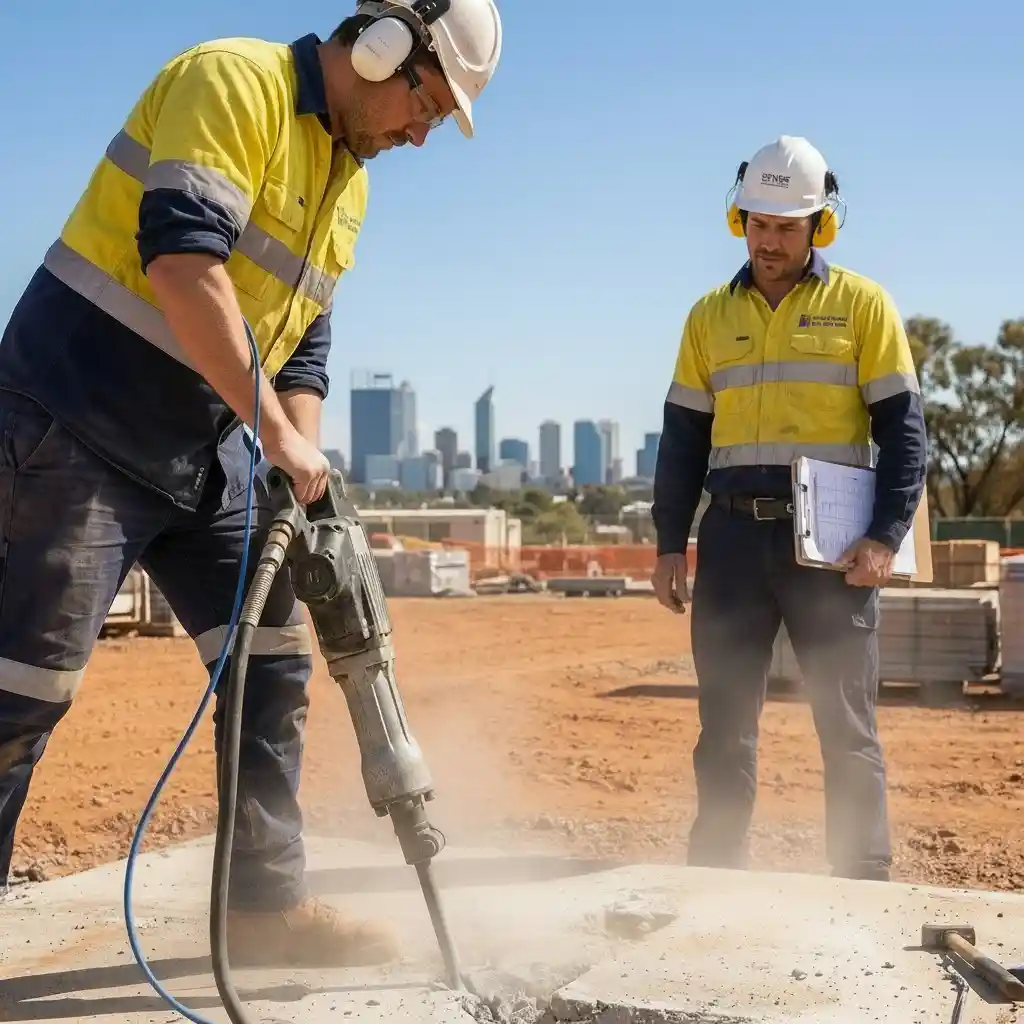
Hearing protection is used on almost every industrial and construction site in WA. Earplugs and earmuffs reduce exposure to hazardous noise and form a critical, self imposed part of workplace safety.
But used in isolation, these items are not enough to manage noise risk. Business must implement proper monitoring to determine exposure levels and confirm the efficacy of their engineered controls. If not, they risk safety shortfalls and compliance disasters.
In this guide, we outline why PPE cannot be your only control measure against noise and how our workplace monitoring programs design more effective and compliant approaches. For more information, get in touch.
PPE Should Be Your Last Line of Defence
Following the hierarchy of controls, personal protective equipment (PPE) should be the final layer of protection – not the primary solution.
This means site managers must first consider how to reduce noise at the source. Engineered controls, isolation, administrative changes and many other measures should all be examined before PPE plans are even drafted.
That doesn’t mean PPE isn’t important, it simply means that it does not eliminate the hazard itself. Workers can still be exposed to harmful noise levels if hearing protection is faulty or not worn consistently. Workplace noise testing and source-focused controls minimise the potential of those faults causing harm
Exposure Cannot Be Assessed by Assumption
We find that some site managers will rely on hearing protection because they assume it will do an adequate job. The problem with that is that exposure levels cannot be assumed, they must be measured.
That’s because noise can vary significantly depending on:
- Equipment condition
- Duration of tasks
- Number of machines operating simultaneously
- Site layout and acoustics
- Worker proximity to noise sources
Just because a task or piece of machinery was manageable on one site does not mean it won’t exceed exposure limits on another. Environmental and operational differences can increase risk.
Without an occupational noise assessment, it is all but impossible to understand how these factors interact to create risk.
Monitoring Verifies Your Controls
Just as you can’t assume exposure levels, you can’t assume the efficacy of your controls. An occupational noise assessment and audiometric testing offer measurable data on actual exposure during normal activities.
You can review existing measures and assess:
- Which tasks or areas continue to present high risk
- Whether hearing protection is sufficient
- The efficacy of current controls
- Whether additional controls are required
If exposure remains high despite PPE use, further action is needed. This verification step is a critical step in your safety and compliance programs.
Hearing Protection is Limited
Even when appropriate, well fitting hearing protection is provided, real world conditions can reduce its effectiveness. Workers may wear it incorrectly or remove it to communicate with co-workers. In hot and demanding workplaces, they may remove it entirely out of discomfort.
PPE is also, at times, impractical. Excessive use may interfere with communication, alarms and situational awareness, creating additional safety risks.
Conducting an occupational noise assessment and implementing the recommended controls is a more balanced approach to risk management that is immune to these practicality issues.
Support Your Compliance
WA’s work health and safety regulations require businesses to ensure that workers are not exposed to hazardous noise levels (so far as reasonably practicable).
Providing PPE does not meet that obligation in its entirety. You are still required to assess and manage noise exposure and regulators will expect site managers to understand the risks and controls present on their site. Conducting an occupational noise assessment is itself a compliance step, providing evidence to demonstrate that:
- Exposure has been assessed
- Controls have been considered and implemented
- PPE selection is appropriate
- Risks are being reviewed over time
Speak with a Noise Assessor Today and Understand the Risks Beyond PPE
Hearing protection is an important and versatile control measure, but it cannot be your only control measure.
Proper assessment and monitoring is the only way to implement a comprehensive management strategy that protects both safety and compliance. ENVSS supports business across Western Australia in conducting such assessments and providing practical insight into noise exposure risks.
To arrange audiometric testing or an occupational noise assessment, click here.