
A workplace noise report details sound levels, exposure and risk on site. Unfortunately, many site managers struggle to translate the results into practical safety decisions.
Understanding the information in your report is key to effective noise management. That will allow you to make safety decisions that stand up against regulator scrutiny.
This guide explains how you can interpret and act on the data in a noise report. To arrange an occupational noise assessment on your site, get in touch.
What are the Key Noise Metrics?
It’s important you understand the technical terms in your occupational noise assessment.
The most important is LAeq,8h, average noise exposure over an eight hour workday. This is the standard regulators accept as best representing employee’s risk of hearing damage.
Your report may also reference:
- LAeq,T – the average noise level over a specific task or period
- LC,peak – the highest instantaneous noise level recorded
- Dose (%) – a representation of how close exposure is to the allowable limit
It’s important to understand that these values don’t represent a single source or risk. They should be interpreted as a whole (i.e. a picture of the whole of site risk).
What Do They Mean?
Once you understand the metrics, the next step is to interpret them and take appropriate action.
In doing so, one key question must be answered: does exposure exceed the workplace standard. That typically means 85 dB(A) over an eight hour period or peak levels above 140 dB(C). However, don’t get caught up on the latter. Exposure is cumulative and even moderate noise levels can be hazardous if workers are experiencing them for extended periods.
If your occupational noise assessment has returned results below those thresholds, your exposure is controlled. Results approaching the limit will require further attention.
If exposure exceeds standards, you must take immediate action. This could include working with a qualified noise assessor to review existing controls and implement new measures.
Your Report Reveals High Risk Areas and Roles
Occupational noise assessments will highlight the areas, tasks and roles that pose the highest noise exposure risk. These sections are incredibly important because they identify where you should place your focus.
For example, your report may show that:
- One particular piece of machinery produces significantly higher noise levels
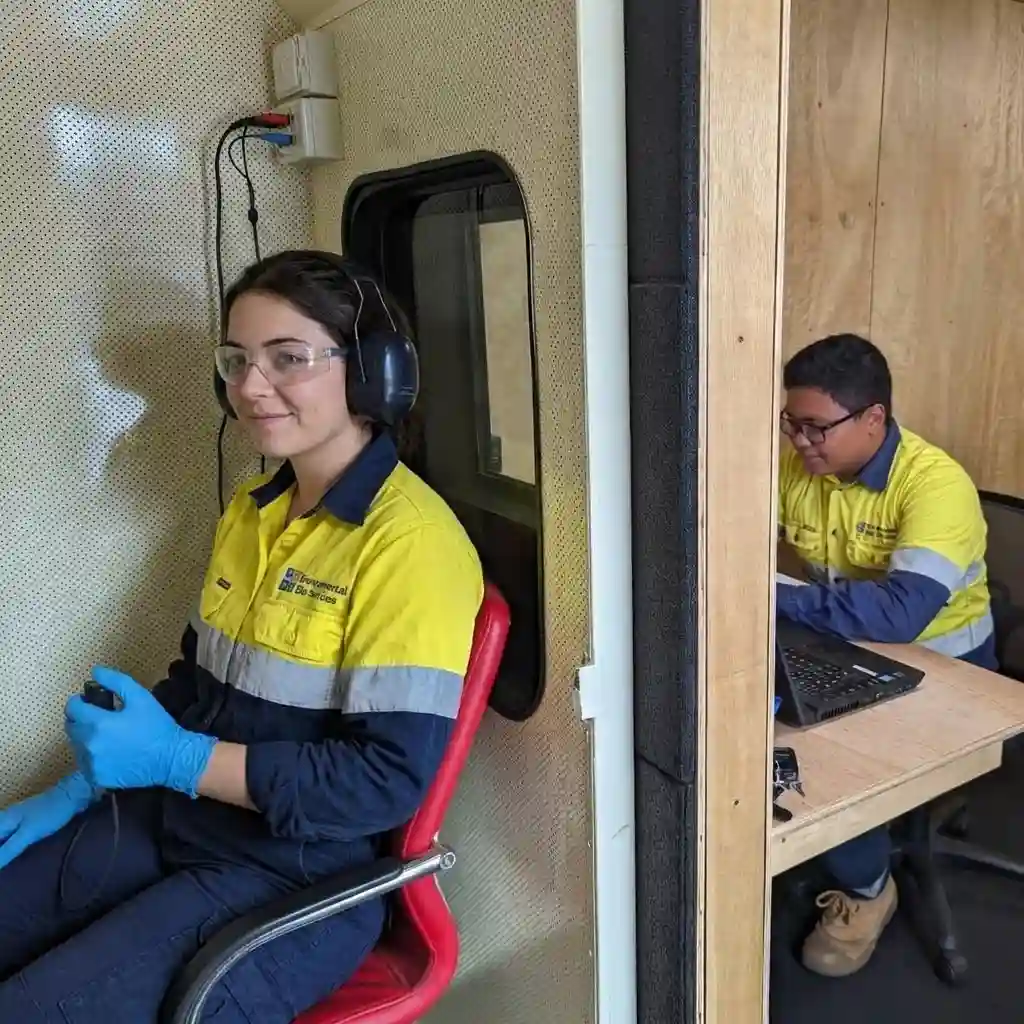
- Audiometric testing suggests workers in a specific role are exposed for longer durations
Understanding these patterns empowers you to implement prioritised, targeted controls rather than catch-all measures.
Use What You’ve Learnt to Build Control Measures
The purpose of an occupational noise assessment is to inform action.
Most reports will include recommendations based on the hierarchy of controls. That means you will be prioritising reducing noise at the source before you move on to personal protective equipment.
For example:
- Engineering controls such as enclosures or isolation
- Administrative controls, including task rotation or scheduling
- Selection and verification of appropriate hearing protection
Your workplace noise test will also verify whether existing measures are effective.
COMPLIANCE TIP: Ensure any actions you take are directly linked to the findings of the report. This data serves as defensible evidence should you be audited or investigated.
3 Common Mistakes to Avoid
As mentioned above, so many operators focus on peak noise levels rather than overall exposure. Peaks may cause immediate harm, but long term effects are usually driven by excessive exposure. Both metrics should be considered together.
Another issue is the assumption that hearing protection alone will solve the problem. PPE certainly plays a role, but years of audiometric testing has shown us that controlling noise at the source is even more important. It’s also your regulatory obligation!
Finally, outdated reports only lead to incorrect conclusions. If site conditions have changed, don’t make the mistake of relying on results that don’t reflect current realities.
Workplace Noise Monitoring Protects Your Compliance
From a compliance perspective, an actioned noise report is evidence that risks have been assessed and managed.
At ENVSS, our team design regulator ready programs that help you:
- Demonstrate compliance with WHS requirements
- Justify control measures
- Respond to audits or inspections
- Support occupational hygiene programs
Get in Touch with a Qualified Noise Assessor and Turn Data Into Practical Action
A workplace noise report is only effective if you understand how to use it. If interpreted and applied correctly, it provides a clear direction toward occupant safety and regulatory compliance.
ENVSS supports businesses across Western Australia with occupational noise assessments and regulator ready reporting.
To learn more or arrange workplace noise testing on your site, speak with a member of our team.