
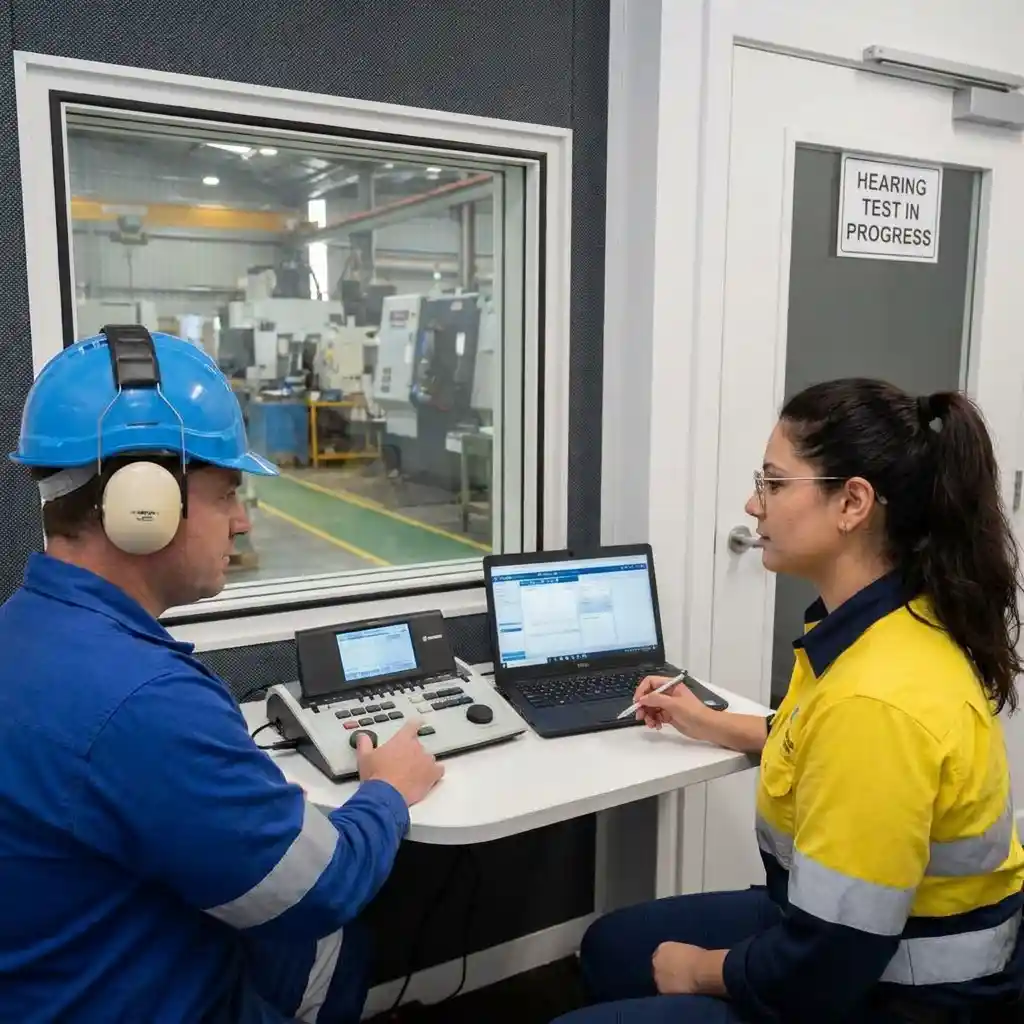
Hazardous noise is present on almost every industrial, mining and construction site. It’s often viewed as an unavoidable part of daily operations, but that doesn’t mean it’s exempt from health and safety regulations.
The first step in building an effective noise compliance program is understanding where that noise is coming from. Not only that, you have to consider how each source combines to create a broader risk profile.
In this article, we run through 5 sources of hazardous noise and how our workplace monitoring programs can protect your site’s safety and compliance. To arrange a consultation, get in touch.
1. Mobile Plant and Heavy Equipment
Mobile plant is one of the most consistent sources of excess noise levels, especially on WA’s mine sites. Excavators, loaders, trucks and much more generate continuous noise and can often be operating simultaneously.
Add engines, hydraulics and other heavy equipment into the mix and you have a significant noise risk.
Our occupational noise assessments place a strong focus on these machines, their usage areas and operating times.
2. Powered Hand Tools
ENVSS workplace noise tests also consider handheld equipment, another common contributor to hazardous noise.
Grinders, drills, jackhammers and other tools tend to produce short bursts of high intensity noise. The individual task and noise level might be brief but repeated exposure throughout a shift poses a significant safety and compliance threat.
It’s also worth noting that these tests are designed to be used in close proximity to the operator, meaning personal exposure tends to be higher compared to larger, more distant equipment. Audiometric testing is an effective way to gauge the individual-level impacts of that proximity.
3. Fixed Plant and Processing Equipment
Similar to mobile plant, fixed plant generates constant background noise. Unlike intermittent sources, this type of noise is difficult for workers to avoid.
Whether it’s a compressor or a pump, a generator or a conveyor, this equipment tends to operate for extended periods and expose occupants’ to excessive noise.
Your occupational noise assessment might suggest that the noise from each individual unit is manageable, but with multiple systems running at the same time, cumulative exposure almost always exceeds regulatory thresholds.
4. Cutting, Grinding and Demolition Activities
These are a major source of not only noise, but also vibration and airborne dust. Sharp, high frequency noises are common during cutting and grinding and they can be particularly damaging over time.
To account for the range of hazards, it is worth considering integrating your occupational noise assessment with air quality and human vibration checks.
NOTE: Noise levels can vary depending on the type of material, equipment used and working environment.
5. Enclosed and Reflective Environments
The work environment itself is an inconspicuous, but intuitive, influence on noise exposure.
Enclosed spaces like workshops and tunnels will of course amplify sound. That means occupants are exposed to an increased cumulative noise level. This is only compounded if walls and surfaces are made of hard materials like concrete or still, which reflect sound waves and build noise.
In conditions like these, even a moderate noise source can prove a significant risk. A comprehensive workplace noise test will consider the nature of your environment and include audiometric testing for workers’ operating in tight spaces.
How We Identify Risks Before They Escalate
Recognising your noise sources is the first step in managing exposure. But to truly understand how they are impacting safety and compliance, they must be measured.
As we’ve said, noise levels can vary significantly depending on usage, environment and duration. Monitoring will confirm whether levels are within acceptable limits and identify the most risk laiden sources.
Only by understanding how hazardous noise originates can you take appropriate steps to implement controls, protect your workers and ensure your compliance.
Arrange Workplace Noise Testing Today and Understand Your Risk Sources
If your site uses or features any of the sources listed in this article, it’s highly likely that hazardous noise is present.
ENVSS supports WA businesses in monitoring and controlling these sources and presenting regulators will evidence backed reporting and due diligence.
To discuss your site and arrange an occupational noise assessment, click here.