
Whether you’re running a factory or a processing plant, noise isn’t uniform across site. Exposure will vary in different areas based on workflow, layout and much more.
It is almost impossible to implement effective controls without a clear understanding of where excessive noise is occurring. ENVSS conducts noise mapping and acoustic surveys to offer a visual, quantifiable representation of risk variation. These form the foundation of our noise monitoring solutions and compliance plans.
In this article, we explain how noise mapping works and 4 ways it can benefit your business. For more information or to arrange a consultation, get in touch.
What Is a Noise Mapping Survey?
Noise mapping surveys form the early stages of our workplace testing. Noise assessors measure sound levels at multiple locations across site to build a detailed picture of noise distribution and create a visual “map” showing how it varies in different areas.
A noise map isn’t a single measurement or spot check – it’s a broader view of your working environment that details how noise behaves in the space. The approach is particularly useful on larger and more complex sites where multiple noise sources are operating at once.
So Why Do You Need One?
Without a map, noise management relies on assumptions. Your ears tell you that one area is high risk, but others don’t need to be worried about.
That’s a far from perfect method and exposes you to safety and compliance failures. A structured survey removes any uncertainty with objective data, allowing you to:
- Identify noise “hotspots”
- Understand how noise travels through the site
- Recognise areas where workers may be exposed unexpectedly
- Prioritise control measures based on actual risk
In short, an acoustic survey enables more effective planning and reduces the likelihood of gaps in your response.
What Noise Maps Do
Identify High Risk Areas
Risk identification. It’s the goal of not just noise maps, but occupational assessments as a whole. Our tests look for areas where noise levels approach or exceed the exposure standard or where workers are likely to spend extended periods of time.
These zones do not have to house an ‘obvious’ source of excessive noise (e.g. heavy machinery). For example, noise could reflect off a hard surface, be amplified by a tight space or compounded with multiple pieces of equipment operating at once.
Mapping reveals these high risk areas and ensures they can be clearly defined and managed during everyday operations.
Support Compliance and Risk Management
Under state and federal WHS requirements, businesses must assess and manage their employees’ noise exposure wherever there is a risk that standards may be exceeded.
Noise mapping supports your compliance with defensible evidence that offers objective data as to how exposure varies across site. It helps you demonstrate that proper occupational noise assessments have been conducted and that isolated controls are based on measured data.
This proves incredibly valuable should you be subject to investigation or audit. Your noise maps proves that you know where risks exist and how they are being managed.
Inform Control Measures
You might have gathered it by now, but a noise map isn’t just about identifying the problem, it’s about solving it.
With a clear understanding of where noise levels are at the highest, you can apply controls more effectively. That might include:
- Relocating or isolating noisy equipment
- Adjusting workflows to reduce time spent in high noise areas
- Implementing engineering controls
- Defining zones where hearing protection is required
A decision based on data will always be more effective than one based on assumptions.
Monitor Changes on Site
Work environments aren’t static and neither are noise conditions. As projects progress and operations change, exposure levels are always shifting.
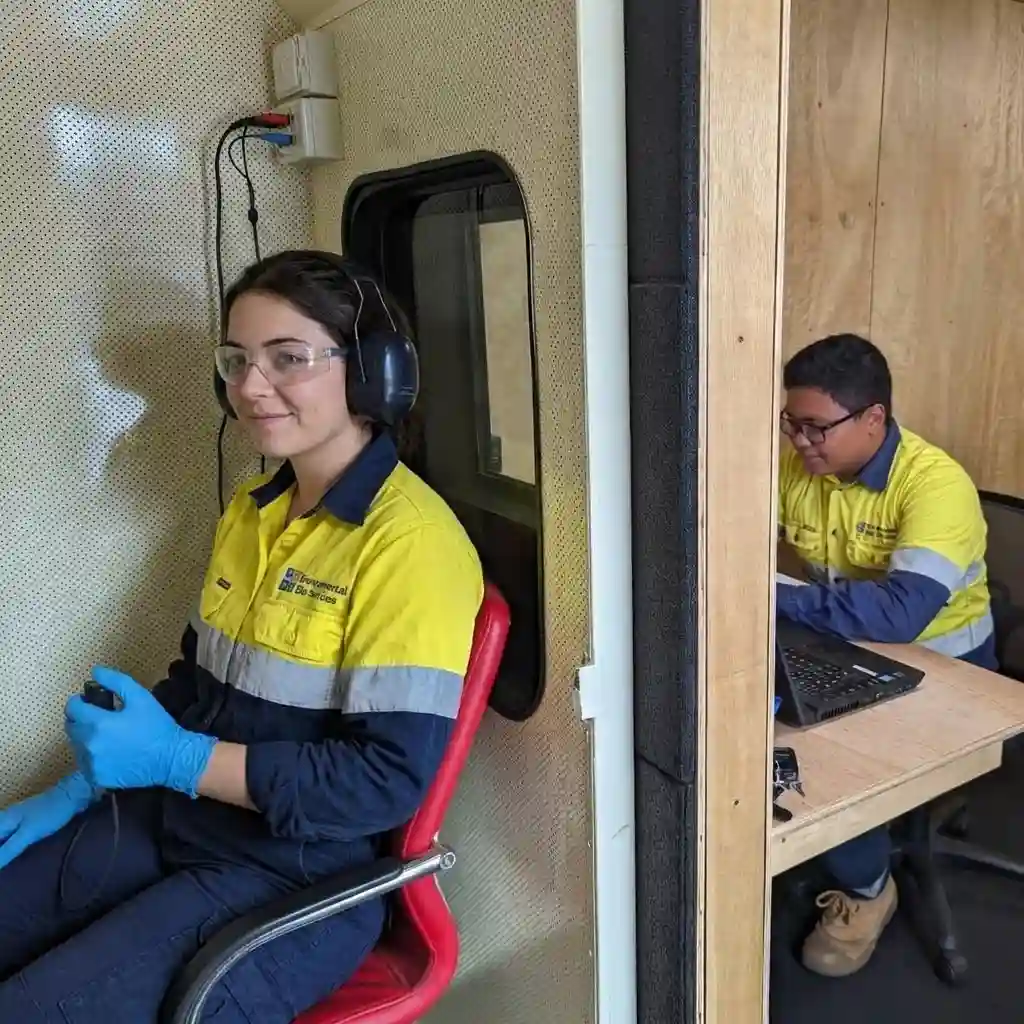
When you increase production, introduce new equipment or make any other changes, noise distribution will change across site. Keeping your noise map updated ensures that your understanding of risk remains accurate. Should you wish, our team is always available for yearly noise monitoring including both mapping and audiometric testing.
Get in Touch and Understand Where Your Risks Are
If your site has multiple sources of noise or a complex layout, a noise mapping survey could be the key to safety and compliance. They give you the clarity you need to manage exposure effectively and present sound reporting to regulators.
ENVSS consultants have supported businesses across WA with detailed noise assessments tailored to their site conditions. We can also provide noise awareness training and audiometric testing.
To arrange workplace noise testing or any other monitoring services, contact our office.