
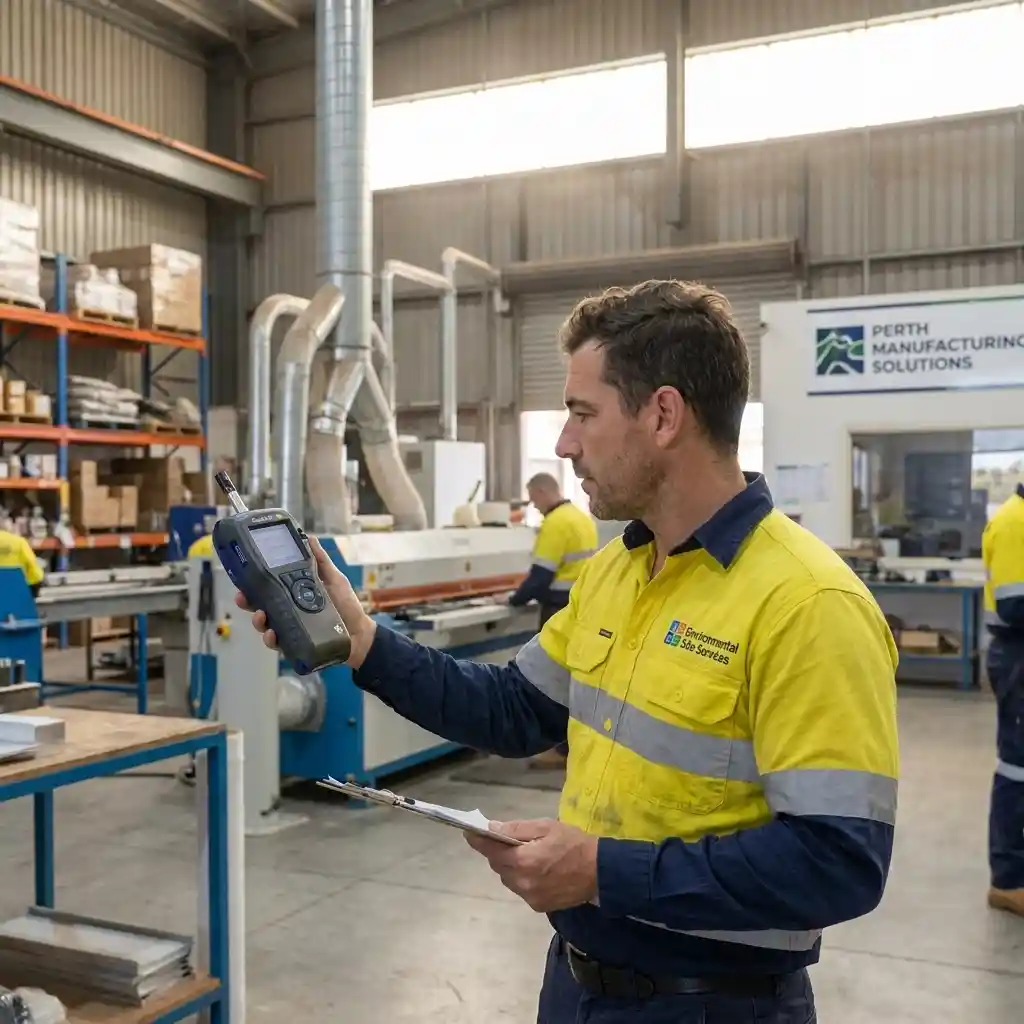
Without proper assessment and control, workplace noise can quickly evolve from a background issue to a critical health and compliance risk. ENVSS’ occupational noise assessments are one of the most effective ways to manage it. We provide clear data to support your reporting and help avoid costly disruptions.
In this article, we outline 6 ways our consultants help WA businesses with tailored workplace noise testing systems. For more information or to arrange a consultation, get in touch.
Protecting Worker Health
The most obvious effect of excessive noise exposure is on workers’ health. Noise induced hearing loss (NIHL) is one of the most common occupational conditions in Australia, developing gradually over a person’s career. It is irreversible and the damage often occurs long before it is recognised.
As well as hearing loss, noise exposure is linked to reduced concentration and cardiovascular strain. There is also a known connection to sleep disruption and subsequent stress and fatigue.
Our occupational noise assessments are designed to identify exposure before it can cause harm, protecting wellbeing and performance on site.
Protecting Workplace Safety
They might seem similar, but excessive noise compromises workers’ health and safety in distinct ways.
High noise levels interfere with communication, warning signals and alarms. That increases the likelihood of safety incidents, especially in environments where coordination is critical.
ENVSS measures noise levels at different locations across sites to identify areas where communication may be compromised. Our team will assist you in designing and implementing appropriate controls, whether that be isolating noise producing equipment or creating hearing protection zones.
Protecting Your Compliance
Australia’s WHS framework requires business to ensure workers are not exposed to hazardous noise. ‘Hazardous’ noise is typically defined as 85 dB(A) averaged over an 8-hour period, with a peak limit of 140 dB(C). Some projects might also have to meet requirements around audiometric testing.
If your site risks exceeding this risk, you are obligated to implement suitable controls. Conducting workplace noise testing beforehand gives you evidence to
- Determine what controls are needed (and where)
- Demonstrate that your actions constitute compliance with regulations
Without formal monitoring, it can be difficult to track exposure levels and verify the efficacy of your response. That in turn makes the compliance and reporting process much more difficult. In some cases, failure to monitor can even result in punitive action.
Protect Your Financial and Operational Efficiency
Workplace noise monitoring is an additional expense – but ignoring it comes with a host of costs. If your workers develop NIHL on site, they may be entitled to workers compensation claims. In addition to those repayments, you may also be burdened by increased insurance premiums and legal and administrative fees.
Noise issues also affect productivity, subjecting workers to the aforementioned fatigue and communication difficulties. That means errors are more common and supervision more necessary.
An ENVSS noise assessor will design a program that helps you identify these risks and avoid the costs of remediation.
Improve Your Site Planning and Control Measures
Even if there isn’t a health and compliance issue you need to immediately address, workplace noise testing provides a foundation for better planning and decision making.
With a clear picture of where and when exposure occurs, site managers can:
- Adjust layouts to reduce exposure
- Select quieter equipment or implement “buy quiet” strategies
- Improve ventilation or acoustic controls
- Refine work schedules to limit the duration of exposure
At the end of the day, a targeted approach will always be more effective than assumptions or generic controls.
Build Better Relationships with Staff and Regulators
Underlying everything is that a structured workplace monitoring program demonstrates you are actively managing risk.
For your staff, it gives confidence that their health is being taken seriously and that they are supported by robust training programs.
For regulators, it provides clear, objective evidence that you are meeting your obligations.
Take Control of Workplace Risks and Arrange Noise Testing Today
Noise monitoring isn’t just about compliance, it helps you protect workers, safety and project viability.
ENVSS designs site specific noise monitoring programs for businesses across Western Australia. Our unique understanding of WA’s industrial and regulatory landscapes allows us to gather the precision data you need to manage risk effectively.
To discuss your requirements or arrange an occupational noise assessment get in touch.