
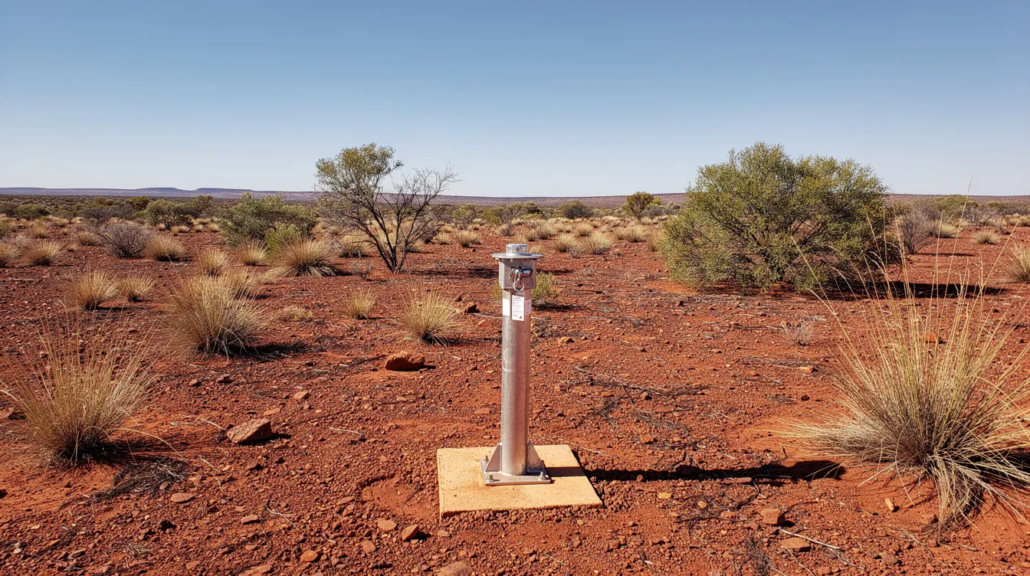
If you extract, manage or monitor groundwater in Western Australia, you need to understand which licences and approvals apply to your project. Here, we talk about the practical licence requirements for groundwater monitoring and abstraction under current WA legislation, with a focus on what environmental managers, project managers and consultants need to know.
Western Australia relies heavily on groundwater resources. Approximately 78 percent of all licensed water in WA comes from groundwater aquifers, and groundwater accounts for about 40 percent of Perth’s drinking water supply. Across Australia more broadly, groundwater accounts for 30 percent of water consumption, and it provides drinking water for up to 50 percent of the population. Groundwater is also essential for irrigation and agriculture, and it supports local ecosystems and biodiversity. It replenishes itself if managed properly and not over-extracted, but getting that balance right depends on reliable data.
This article reflects the regulatory position as at 2025–2026. Readers should confirm details against current Department of Water and Environmental Regulation (DWER) guidance, as policies can and do shift quite regularly. Environmental Site Services (ENVSS) supports clients across Western Australia with practical groundwater monitoring programs, from system design through to data collection and compliance reporting. Groundwater monitoring is crucial for sustainable management in Perth and across the state, particularly as climate change places increasing pressure on water resources.
Groundwater regulatory framework in Western Australia
Several agencies and pieces of legislation govern groundwater management and monitoring in WA. Understanding which apply to your project is the first step toward compliance.
The primary agencies include:
- Department of Water and Environmental Regulation (DWER) – administers the Rights in Water and Irrigation Act 1914 (RIWI Act), approves water licences, operating strategies and monitoring programs.
- Environmental Protection Authority (EPA) – assesses major proposals under Part IV of the Environmental Protection Act 1986, setting Ministerial Statements with environmental conditions that frequently include groundwater monitoring.
- Department of Mines, Industry Regulation and Safety (DMIRS) – regulates mining operations and works with DWER and EPA on groundwater-related approvals for mining activities.
- Department of Health – sets guideline values for contaminated groundwater where human health risk is involved.
- Local governments and catchment authorities – may influence approvals for public water supply areas and local infrastructure.
The key legislation affecting groundwater includes the RIWI Act (licences for taking water and constructing wells), the Environmental Protection Act 1986 (works approvals, Part V licences, Part IV assessments), the Contaminated Sites Act 2003 (investigation and monitoring of groundwater contamination), the Mining Act 1978 (conditions on mining leases), and the Planning and Development Act 2005 (environmental management plans for developments near sensitive areas).
Groundwater monitoring obligations most commonly arise through abstraction licences and operating strategies under the RIWI Act, works approvals and Part V licences for prescribed premises such as landfills and tailings storage facilities, Ministerial conditions for projects assessed by the EPA, and contaminated site investigation orders. Each of these pathways can require specific monitoring wells, level monitoring and quality monitoring as enforceable conditions. DWER alone regulates over 12,000 water licences involving more than 4 trillion litres of water annually. Groundwater monitoring is essential for informed management decisions, and monitoring ensures that extraction remains sustainable and that water quality meets safety standards.
When you need a groundwater licence or approval
Under the RIWI Act, you generally need a 5C licence to take groundwater in proclaimed groundwater areas or from artesian aquifers anywhere in the state. Proclaimed areas include major groundwater systems such as the Gnangara Mound near Perth, Pilbara aquifer systems and Goldfields groundwater areas. Mining companies, water utilities, irrigators and industrial operators commonly hold these licences.
Typical triggers for a groundwater abstraction licence and associated monitoring conditions include:
- Mine dewatering operations extracting groundwater from shallow or deep aquifers.
- Borefields supplying process water for mining or industrial operations.
- Irrigation schemes where deep drainage or salinity changes can affect the water table.
- Municipal water supplies drawing from proclaimed aquifer systems.
Even if you are not abstracting water for use, you may still need a 26D licence to construct or alter wells in proclaimed areas. This applies to monitoring bores drilled for level monitoring or groundwater sampling. In unproclaimed, non-artesian settings, monitoring-only wells may be exempt, but this should be confirmed with DWER on a case-by-case basis.
Many development and mining projects also trigger “prescribed premises” requirements under the Environmental Protection Regulations 1987. Works approvals and Part V environmental licences for these facilities routinely specify groundwater monitoring. Common examples include landfills and industrial waste facilities where leachate poses a risk of groundwater contamination, tailings storage facilities and evaporation ponds associated with mining operations, and fuel storage or bulk chemical facilities where spills could introduce potential contaminants to soil and groundwater. Groundwater monitoring detects industrial or agricultural contaminants early, and monitoring wells help identify environmental hazards early in mining. Monitoring wells are critical for environmental sustainability in mining operations.
Recent and emerging changes in WA groundwater licensing and monitoring
The regulatory environment for groundwater in WA has shifted noticeably since 2022. Several trends are worth tracking if you hold or are applying for groundwater licences.
DWER is placing stronger emphasis on cumulative impacts and sustainable yields. The Millstream Aquifer in the Pilbara illustrates this well. A proposal to renew a 5C licence for 6 gigalitres per year of abstraction, combined with a temporary licence allowing up to 9 gigalitres per year, raised concerns because 9 gigalitres exceeds the sustainable limit set in 2013. Decisions like this signal that regulators are scrutinising licence volumes more closely, particularly where long-term groundwater level decline or climate change reduces recharge.
A 2024 audit by the WA Auditor General found that DWER’s on-ground compliance inspections had dropped by approximately 67 percent between 2021–22 and 2023–24, with desktop inspections declining by around 71 percent. In response, DWER established a new assurance directorate, including a water assurance division, with plans for a risk-based compliance program from 2025 onwards. For licence holders, this means self-reported data will likely face greater independent verification in coming years.
There are also growing expectations for automated monitoring systems. Groundwater levels can be monitored manually or automatically, and automatic systems transmit groundwater data to a secure database for real-time analysis. Monitoring methods include electric tape measurements for manual dipping, pressure transducers for automated logging, and even InSAR satellite technology for broad-scale ground movement assessment. Computer models predict future trends based on groundwater data, supporting more sophisticated approaches to managing extraction limits and preventing over-extraction.
Since around 2022, DWER has also strengthened requirements around quality assurance, accredited laboratory analysis and data transparency. Recent licence amendments, such as updates to licence L9259/2020/156IR-T15 in 2025, have added clearer method specifications for groundwater sampling and analysis, updated reporting conditions, and introduced seepage management plans triggered by standing water level exceedances.
Groundwater monitoring requirements attached to licences and approvals
Groundwater licences and environmental approvals in WA typically include conditions requiring ongoing monitoring of groundwater levels and groundwater quality at specified locations and frequencies. Groundwater monitoring measures quality and quantity over time and helps assess aquifer status and trends.
Common monitoring system elements required under WA approvals include:
- Monitoring well networks – up-gradient and down-gradient of potential contamination sources such as tailings dams, landfills or chemical storage areas. Groundwater monitoring involves drilling boreholes for water sampling, and drilling boreholes allows for sampling at different depths up to 1,000 meters. Some monitoring wells are drilled as deep as 600 metres to intercept confined aquifers.
- Level monitoring – measuring standing water levels to track drawdown, rebound, and impacts on nearby receptors including neighbouring bore holes, springs and wetlands. Current groundwater measurements are compared to historical data to detect changes over time.
- Quality monitoring – groundwater monitoring includes testing for pH, conductivity, and nitrates, along with a broader range of parameters. Water samples are tested for contaminants including heavy metals and pesticides. Groundwater quality is assessed using 40 different water quality parameters in many programs, covering major ions, nutrients, metals, hydrocarbons and site-specific chemical analytes.
To put the scale of monitoring into context, over 120 monitoring bores were drilled around the Carmichael Mine in Queensland, and Bravus monitors groundwater health at sites 35 kilometres from the mine. While that is an interstate example, similar scales of monitoring networks are common across major WA mining operations. Monitoring wells provide critical data on groundwater quality and levels, and regular sampling identifies contamination risks and helps maintain water safety.
Conditions are often worded to require installation of monitoring bores to a defined depth, maintenance of standing water level records at specified frequencies, and comparison of water samples against baseline groundwater quality or trigger levels. Where trigger values are exceeded, contingency protocols typically require increased sampling frequency, notification to the regulator, and implementation of mitigation measures. For example, some groundwater licence operating strategies require resampling of affected bores within two weeks of an exceedance, with escalating actions if degradation continues.
Designing a compliant groundwater monitoring program in WA
Setting up a groundwater monitoring program that meets WA licence and approval requirements is a practical process, but it needs to be grounded in the specific conditions attached to your project.
Understand your approval conditions. Start by reading every relevant document: your 5C or 26D licence, operating strategy, works approval, environmental protection licence, any Ministerial Statements, and contaminated site notices. These define what wells are required, what parameters to collect, at what frequencies, and what reports to submit.
Select monitoring well locations. Well placement should be informed by site-specific hydrogeological assessment, including aquifer geology, depth, groundwater flow direction and connectivity with surface water. Monitoring wells need to be positioned to capture background conditions (up-gradient) and detect impacts (down-gradient), around potential contamination pathways, and near receptors such as neighbouring water supplies, wetlands and ecosystems. Perth’s groundwater monitoring helps protect local ecosystems like lakes and wetlands, and groundwater monitoring protects vital ecosystems dependent on groundwater in Perth. Groundwater monitoring in Perth assesses the health of underground water systems across the region.
Determine monitoring frequency and methods. Frequency depends on risk and licence conditions. Level monitoring may be continuous (using automated loggers) or periodic (manual dipping). Water quality sampling typically occurs monthly or quarterly, with event-based sampling if triggers are exceeded. Water quality sampling follows AS/NZS 5667 standards to analyze contaminants, providing a consistent and defensible approach.
Ensure suitable well construction standards. The depth, screen interval, casing, sealing and filter pack of each monitoring bore must be appropriate for the aquifer and contamination pathways of interest. Certified drillers are required for many bores, particularly artesian or proclaimed-area installations.
Collect baseline data. Baseline groundwater data collected before construction or operations is important for establishing natural variability. This includes standing water level records and groundwater quality characterisation over sufficient time to capture seasonal variation driven by rain and recharge patterns.
Environmental Site Services works with clients to translate regulatory conditions into practical monitoring networks and schedules that can be safely undertaken on active sites, from mining operations through to infrastructure construction and land development.
Data quality, reporting and regulatory compliance
Regulators increasingly expect defensible environmental data. This means clear chains of custody, calibrated equipment and consistent sampling methods across campaigns and years.
Typical quality assurance and quality control elements for groundwater monitoring in WA include:
- Field blanks and duplicate water samples to verify sampling integrity.
- Calibration checks on field instruments before each sampling event.
- Adherence to AS/NZS standards and DWER guidelines for sample collection, preservation and transport.
- Use of NATA-accredited laboratory analysis for all water quality parameters.
DWER’s Operational Policy 5.12 sets out expectations for hydrogeological reporting. Results must be presented in both tables and graphs, with raw data in appendices. Reports should include production volumes, rainfall, groundwater levels and electrical conductivity on a consistent time scale. Where deterioration occurs, reports must explain the cause and describe remedial actions.
Common reporting obligations linked to groundwater licences include annual environmental reports summarising groundwater levels and groundwater quality trends, event-based reports following exceedances of trigger values or licence limits, and periodic reviews of groundwater management plans and operating strategies.
Monitoring system outputs should support early detection of groundwater contamination and provide evidence to regulators that corrective actions are being implemented when required. Monitoring also helps detect seawater intrusion into coastal aquifers in Perth, which is an increasingly relevant factor as extraction and climate pressures interact. Long-term datasets are essential for identifying trends, supporting informed decisions and enabling regulators to assess whether water resources are being managed sustainably across the population of licence holders.
Role of Environmental Site Services in WA groundwater monitoring and licensing
Environmental Site Services supports clients across Western Australia with practical groundwater monitoring programs designed to meet licence conditions and environmental approvals.
Core services related to licence and approval compliance include coordination of bore installation, setup of monitoring wells networks, routine level monitoring, groundwater sampling, and water quality investigations. ENVSS technicians collect field data using calibrated equipment and consistent methods, providing knowledge and measurements that clients can rely on for regulatory reporting.
Sectors served include mining, infrastructure, industrial facilities, land development, waste facilities and local government water resources projects. Whether your project involves developing a new borefield, managing dewatering for construction, or maintaining long-term compliance monitoring at an operating facility, ENVSS delivers reliable field data that stands up to regulatory scrutiny.
ENVSS technicians are experienced in working under WA licence conditions, Ministerial Statements and site-specific environmental management plans. This means monitoring programs are designed to react to changing conditions, remain consistent over time, and align with what DWER and other regulators expect.
If you need to set up, review or improve a groundwater monitoring program, or if you need support interpreting your licence conditions, speak with our team. Contact Environmental Site Services to discuss your groundwater monitoring requirements and arrange a monitoring proposal tailored to your project.